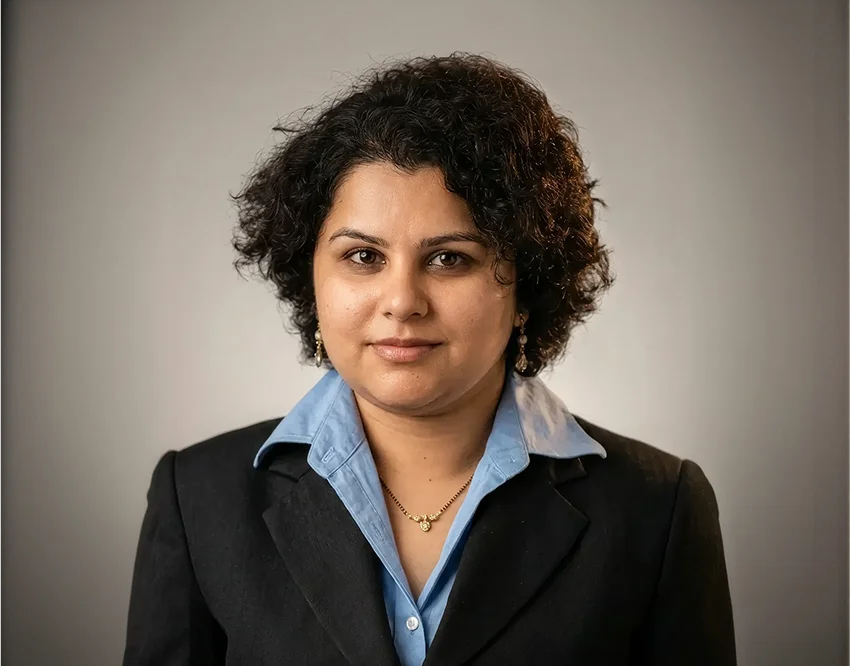
(Credit: Mrunal Pandit)
Introduction of Profile: With over two decades of experience across underwriting, broking, and global insurance leadership, Mrunal Pandit brings a uniquely holistic perspective to risk, one that blends technical depth with strategic foresight. Today, as Head of Global Insurance at VFS Global, she leads efforts to map and manage risks across the organisation’s global footprint.
From Curiosity to Career: An Unconventional Path into Risk
Mrunal’s journey into risk was not linear, it began in marketing, where she developed strong communication and stakeholder engagement skills. Yet, she soon realised she was drawn towards more analytical and structured work.
“That led me into property underwriting, where I learned the fundamentals of risk assessment and how insurers evaluate exposures,” she said.
Her transition into broking further expanded her perspective.
“I began to see how clients perceive risks, how coverage is structured, and how critical it is to balance commercial realities with technical rigour.”
Seeing Risk Firsthand: Lessons from the Ground
Early in her career, a key lesson shaped how Mrunal approaches risk today: risk must be understood in context, not just on paper.
One of her mentors insisted that underwriting should never be done purely from behind a desk, encouraging her to visit operational sites firsthand.
“Seeing the operations firsthand helped me understand the real risk environment, ask better questions, and structure more effective insurance solutions,” she shared.
A 360-Degree View: Bridging Technical and Strategic Risk
Having worked across underwriting, broking, and corporate roles, Mrunal has developed a comprehensive view of risk from multiple angles.
“Underwriting taught me discipline, broking taught me agility, and corporate roles taught me strategic alignment,” she explained.
This 360-degree perspective enables her to approach risk not as isolated incidents, but as interconnected components of a broader organisational strategy.
Turning Challenges into Frameworks: Managing NatCat Risks
One of the most defining challenges in Mrunal’s career came from navigating the increasing frequency and severity of natural catastrophe risks.
Rather than responding reactively, she led the development of a structured risk framework playbook.
“The key was cross-functional collaboration, using data-backed modelling, and ensuring leadership buy-in,” she explained.
This experience reinforced a crucial lesson: “Complex risks require both technical depth and organisational alignment.”
What Keeps a Risk Leader Motivated
(Credit: Mrunal Pandit)
After more than two decades in the industry, Mrunal remains driven by the dynamic nature of risk.
“Whether it’s climate-driven catastrophes, cyber threats, or geopolitical shifts, no two years look the same,” she said.
Equally important is her commitment to continuous learning.
“Continuous learning keeps me intellectually engaged and opens doors to new perspectives,” she shared.
Looking Ahead: The Future of Risk Leadership
As the risk landscape evolves, Mrunal believes the role of risk leaders is shifting towards becoming strategic enablers within organisations.
“Risk leaders will increasingly serve as strategic enablers, not just risk mitigators,” she noted.
For the next generation, her advice is clear and practical: “Be agile, be adaptive, and always think ahead. Don’t just manage the risks you see today. Prepare your organisation for the risks of tomorrow.”