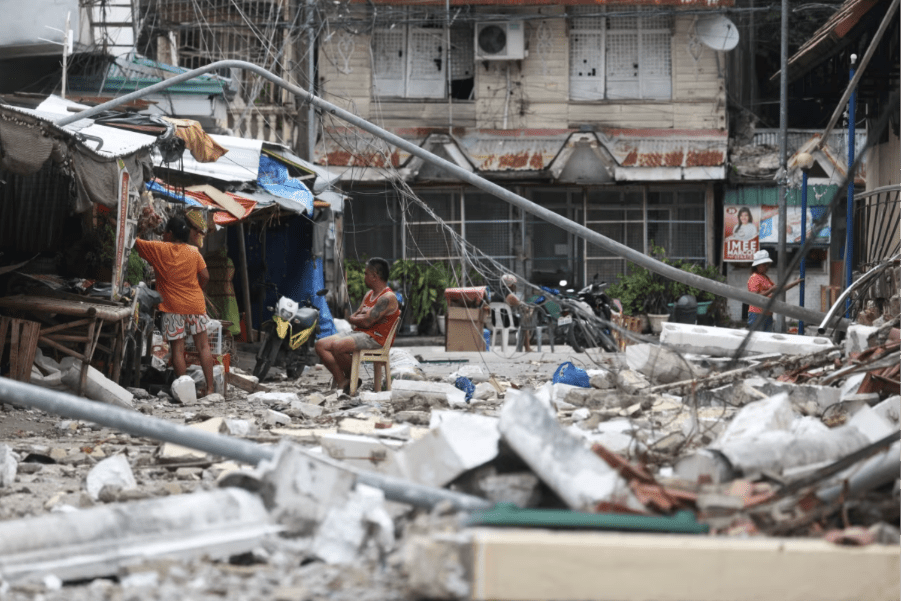

(Credit: Canva)
For many in Singapore, earthquakes are considered a distant threat. Situated away from major tectonic plate boundaries, the city-state has long been regarded as relatively safe from significant seismic activity. However, new research suggests that large earthquakes occurring hundreds of kilometres away may still have long-term implications for Singapore.
According to an article from The Straits Times, a recent study found that major earthquakes in Sumatra have caused Singapore and surrounding regions to gradually sink over time due to slow deformation deep within the Earth’s mantle. While the movement is measured in millimetres rather than metres, researchers warn that these subtle geological shifts could compound the effects of rising sea levels and should be considered in long-term coastal planning.
Although these changes are not expected to pose an immediate threat to public safety, they highlight an important reality for organisations: risk is not always direct, immediate or confined by national borders.
Beyond Shaking: The Hidden Business Risks
The greatest risk from regional earthquakes is often not the tremors themselves, but the cascading disruptions that follow.
Singapore plays a critical role as a global financial, logistics and manufacturing hub, with businesses heavily dependent on regional supply chains. A major earthquake in neighbouring countries could damage ports, factories, which caused delay movements of raw materials and finished goods across Asia.
Critical infrastructure may also be indirectly affected. Undersea telecommunications cables, power connections and shipping routes can experience disruptions following significant seismic events, potentially impacting digital connectivity, trade and cross-border operations.
Building Resilience Before the Next Natural Disaster
While earthquakes themselves cannot be prevented, organisations can reduce their exposure through proactive risk management.
Organisations can mitigate these risks by strengthening supply chain resilience, regularly testing business continuity plans, assessing critical infrastructure dependencies, and incorporating emerging physical risks into long-term planning. Reviewing insurance coverage for property damage and business interruption can also help businesses better prepare for the cascading impacts of major regional earthquakes.
Looking Ahead
For risk professionals, the lesson is clear: resilience is no longer about preparing only for local threats. It requires understanding how regional geological events, climate change and interconnected global operations can combine to create complex risks that evolve over time. As organisations continue to strengthen resilience across Asia-Pacific, incorporating these emerging insights into strategic planning will become increasingly important.