
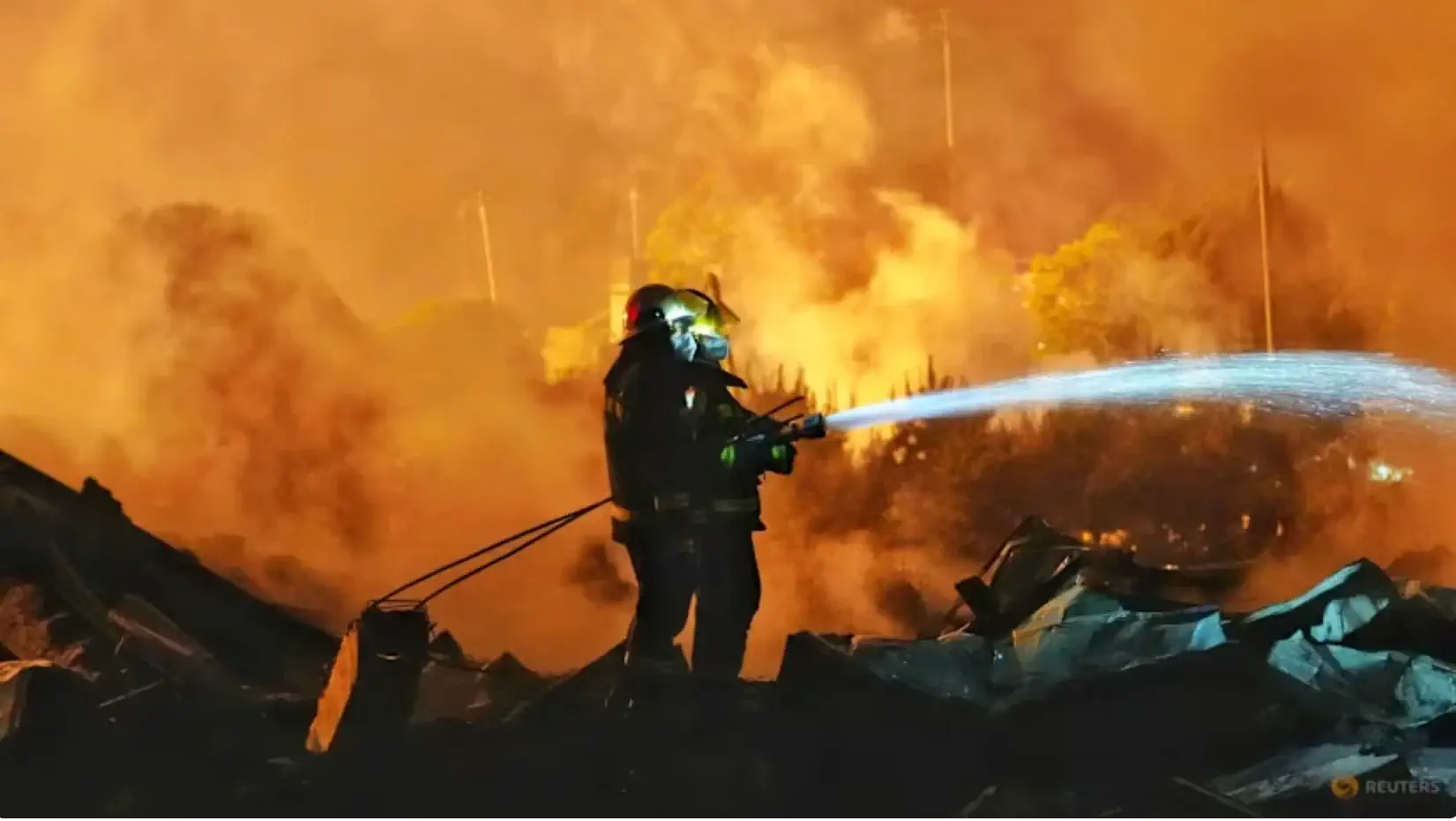
(Credit: Reuters)
On 4 May 2026, a deadly explosion at a fireworks factory in China’s Hunan Province killed 26 people and injured 61 others, according to BBC News. Authorities deployed more than 1,500 emergency responders, supported by search dogs, drones, and robots, as rescue teams worked through the debris. Seven individuals were pulled from the wreckage during the operation.
According to CBS News, Chen Bozhang stated that search and rescue efforts have largely concluded, though verification of casualty figures and identification of victims remain ongoing.
Investigations into the cause of the explosion are ongoing, with authorities yet to confirm the exact trigger.
The incident underscores the inherent risks associated with handling hazardous materials in industrial environments, particularly in sectors such as fireworks manufacturing, where operations involve highly volatile substances.
What This Means for Risk Managers
For risk managers, the explosion serves as a stark reminder that compliance-based safety frameworks alone may not be sufficient in high-hazard environments. Fireworks manufacturing involves tightly coupled processes, where a single point of failure can escalate rapidly into catastrophic loss.
The incident reinforces the importance of layered risk controls — including real-time monitoring, strict segregation of explosive materials, and robust incident response planning. Beyond documentation, organisations should prioritise scenario-based preparedness to ensure teams are equipped to respond effectively under real-world conditions.
The explosion also highlights the growing need for organisations to bridge the gap between operational safety, workplace safety, and enterprise risk management. In high-risk industries, safety cannot remain siloed within operational teams alone; it requires organisation-wide visibility, accountability, and coordination across leadership, operations, and risk functions.
For many organisations, industrial incidents are no longer viewed solely as isolated workplace accidents. Major operational disruptions can quickly evolve into broader business continuity, supply chain, regulatory, and reputational challenges. Facilities handling hazardous materials often operate within interconnected supply chains, meaning disruptions at a single site may create downstream impacts across production, logistics, and customer commitments.