
(Credit: BBC)
20 February 2026 –– A wave of fatal construction accidents in Thailand in January 2026 has sharply focused attention on infrastructure safety, regulatory oversight and risk governance in major public works.
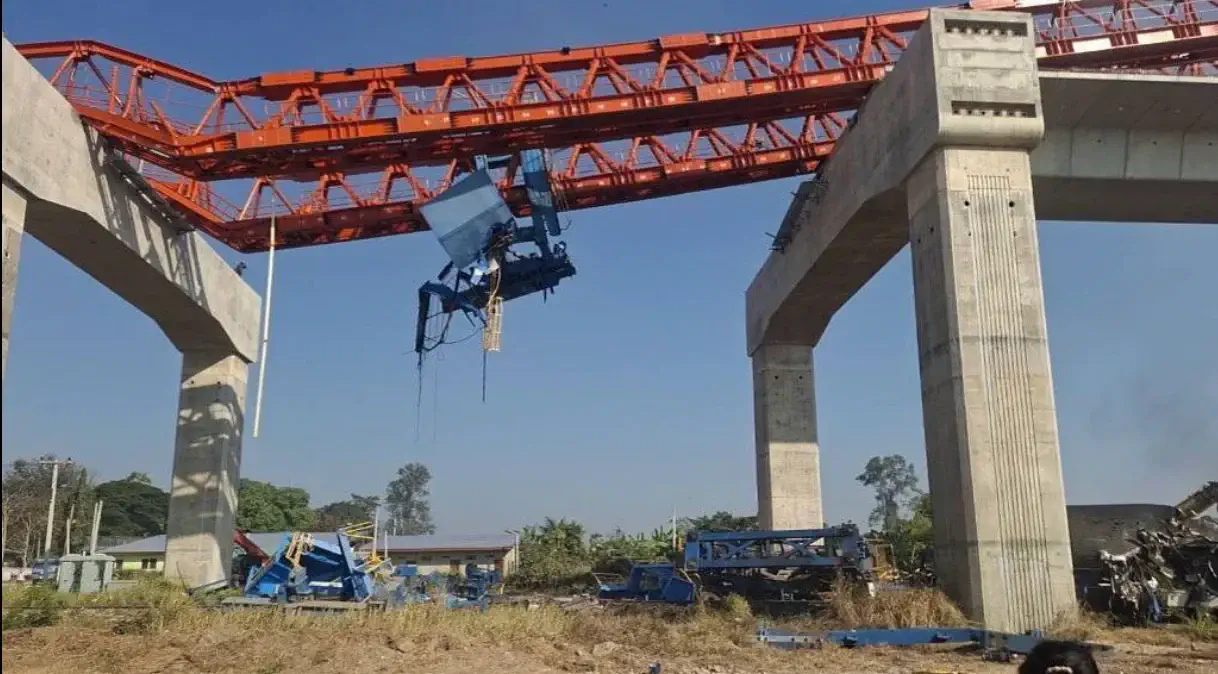
On 14 January 2026, a passenger train travelling from Bangkok to Ubon Ratchathani was hit by a falling construction crane shortly after leaving Nong Nam Khun station in Nakhon Ratchasima province. The crane, part of a Thailand–China high-speed rail project, caused one carriage to derail and another to catch fire. The train was carrying mostly students and workers, and at least 28 people were killed with 64 injured, including seven seriously injured, according to BBC News.
The following day, two people were killed when a construction crane collapsed onto a highway in Thailand. BBC News reported that construction works at both sites were being carried out by Italian-Thai Development, one of the country’s largest construction companies.
The back-to-back nature of the incidents has raised urgent questions over contractor risk controls, the enforcement of safety standards, and potential systemic governance gaps across Thailand’s construction and transport sectors.
Beyond Compliance: The Role of Structured Risk Advisory
Large-scale infrastructure projects involve complex coordination between contractors, regulators, engineers and financiers, meaning safety failures are rarely the result of a single point of breakdown. Instead, they often reflect gaps in risk governance throughout the project lifecycle.
According to Aon’s Managing Construction Risks: 7 Risk Advisory Steps, effective risk management should begin well before physical construction starts and continue throughout operational phases. A structured seven-step advisory process highlights several areas where failures can emerge if risk oversight is insufficient, including early project risk assessments, contract risk allocation, probable maximum loss analysis, and continuous construction-phase monitoring.
Early-stage risk assessment such as reviewing risk registers, contract terms and insurability considerations is critical for identifying potential hazards such as crane operations near active transport corridors. Failure to embed these considerations into project design and governance structures can allow operational risks to escalate unnoticed until catastrophic failure occurs.
Engineering Controls and Operational Risk Signals
According to Chubb’s Tower Cranes Resource Guide, effective crane risk control should begin well before operations start, with detailed engineered planning that includes ground condition assessments, foundation design and wind action strategies, alongside ensuring that all key personnel, from engineers to riggers, are properly certified and trained.
The incidents in Thailand highlight a broader challenge facing infrastructure projects across the region: as projects grow larger and more complex, traditional compliance-based safety approaches may fail to capture dynamic or evolving risks.
Conclusion
Thailand’s dual construction crane collapses serve as a stark reminder that safety risk cannot be treated as a compliance exercise or delegated entirely to contractors. As infrastructure projects grow in scale and complexity across Asia-Pacific, risk managers play a critical role in embedding safety governance, strengthening contractor oversight and ensuring that risk signals are acted upon before incidents occur.