(Credit: David Jacob/Marsh Asia)
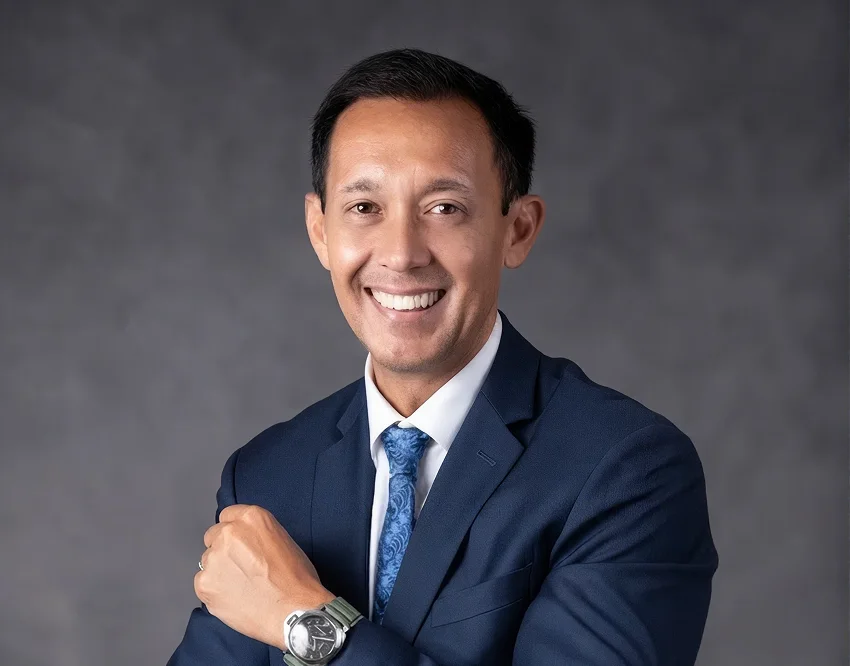
Introduction of Profile: For David Jacob, a career spanning more than three decades with Marsh has been a journey of constant reinvention. Every chapter brought a new challenge — from starting his career in New York, to leading businesses across Asia, to navigating one of the toughest periods in Marsh’s history as CEO of Hong Kong. Today, as CEO of Marsh Asia, he leads one of the region’s largest professional services firms, helping organisations navigate an increasingly complex risk landscape.
A Childhood Introduction to Risk and Insurance
Growing up in the Philippines, he was introduced to the insurance industry through his father, who led a large multinational insurance company. While many children learn about their parents’ work through stories at the dinner table, David’s introduction was far more memorable.
David’s insurance journey began at a young age of 10. His father woke him in the middle of the night and brought him to the scene of a burning building insured by his company.
Standing before the blaze, David listened as his father explained the principles of insurance, indemnity, and business interruption. While he was too young to fully appreciate the complexities of the industry, the experience left a lasting impression.
“I already knew about indemnity and business interruption at a young age, and those concepts just stayed with me,” he recalls.
Years later, after graduating from university, David had the opportunity to join Marsh in New York, unknowingly beginning what would become a 36-year journey with the organisation.
David’s Early Career: Learning Through Different Perspectives
Looking back on his early career, David credits much of his leadership philosophy to the people who guided him along the way, particularly the female mentors and managers he worked under during the first half of his career.
“They were very results-oriented, but at the same time empathetic and compassionate,” he says.
Combined with the influence of his parents, a disciplined father and a nurturing mother, David gradually developed a leadership philosophy centred on accountability, empathy, and continuous growth.
A Life-changing Decade
Among the many chapters of David’s career, none proved more transformative than his decade in Hong Kong.
Before moving there, he had already served as CEO of Marsh Philippines for nine years. When the opportunity arose to lead Marsh Hong Kong, he stepped into one of the region’s most demanding leadership roles. At just 32, David was leading one of Marsh’s largest operations in Asia in one of the world’s most competitive insurance markets.
“It was probably the toughest period of my career,” he admits.
Shortly after taking on the role, Marsh found itself navigating one of the most challenging periods in its history. At the same time, David was working to establish credibility with a team that was understandably sceptical of a young leader arriving from overseas.
“There were many times when I thought about quitting. I wasn’t sure I was equipped to handle it,” he says.
Instead, he leaned on mentors, his father’s support, and a determination to earn the trust of colleagues, winning client relationships, and guiding the business through one of its most turbulent periods.
Looking back today, David sees those years as the defining experience of his leadership journey.
“To overcome that really shaped me into the leader I am today,” he reflects.
A Career of Continuous Reinvention
Having spent more than three decades with the same organisation, David has never viewed his career as a single job.
Over the years, he has taken on roles across functions, geographies, and leadership levels, consistently seeking new challenges and experiences.
“I always viewed my career in five-year blocks,” he explains.
For David, each chapter is an opportunity to learn something new, build a legacy, and prepare for the next challenge. It is a mindset that has allowed him to remain engaged and continue growing throughout his career.
More Than a Leadership Philosophy

(Credit: David Jacob/Marsh Asia)
In recent years, David has become a strong advocate for wellness, recovery, and performance optimisation, inspired by his own journey to improve energy, resilience and overall health. Today, one of his most consistent habits is a daily cold plunge routine, a practice he has maintained every morning for the past four years.
“The principles of risk management are things that I apply to daily life. You need to understand the risk, plan for it, and put the right measures in place,” he says.

(Credit: Marsh Asia)
As a leader, he actively promotes wellness initiatives within the workplace, encouraging colleagues to prioritise both physical and mental wellbeing.
“If you’re able to take care of your health, you’ll thrive personally with your family, but more importantly, you’ll thrive in the office,” he says.
Beyond Insurance and Policies
Despite the growing importance of risk management, David believes there is an opportunity to further elevate the role of risk professionals within organisations beyond transactional insurance placement and policy renewals, recognising them as strategic risk advisors who help shape resilience.
As risks become increasingly interconnected, David believes risk professionals will move even closer to the centre of decision-making.
“I think risk is far more than administration, it is dynamic, strategic and central to how organisations make smarter decisions and strengthen resilience,” he says.
In his view, the most effective risk managers are no longer just protecting organisations from loss; they are helping shape the direction of the business itself.
The Future of Risk Management
“The world has become much more volatile. Gone are the days when you could think about risk as a single event,” he says.
In this volatile and changing landscape world, David believes the next generation of risk professionals will be among the most in-demand and influential the industry has ever seen, shaped by years of navigating disruption and uncertainty.
For David, the principles that have guided him throughout his career remain unchanged. Whether leading through a corporate crisis, taking on unfamiliar roles, or stepping into an ice bath before sunrise, resilience is built long before it is needed.