(Credit: Canva)
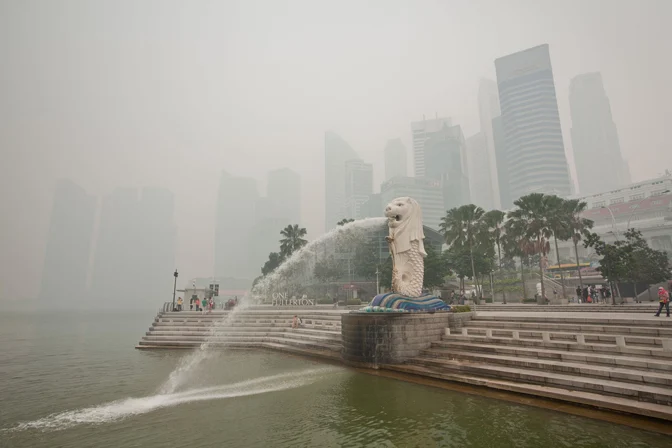
Singapore continues to experience haze conditions as smoke from fires in southern Sumatra and Kalimantan drifts across the region, raising concerns over workforce health, business operations and organisational resilience.
According to the National Environment Agency (NEA), Singapore’s 24-hour Pollutant Standards Index (PSI) ranged from 118 to 155 as of 7pm on 12 October, remaining in the Unhealthy range. Meanwhile, one-hour PM2.5 readings ranged from 93 to 135 µg/m³, within the Elevated band.
Despite showers over parts of Singapore, prevailing southeasterly winds have continued to carry smoke towards the country, with air quality forecast to remain in the Unhealthy range. The worsening situation has also prompted Singapore’s Haze Task Force, comprising 28 government agencies, to prepare additional measures to protect public health should air quality deteriorate further.
How did the haze reach Singapore?
Transboundary haze occurs when smoke generated by fires in one country is transported across national borders by prevailing winds.
According to NEA’s regional haze monitoring, dry weather and hotspots continue to affect parts of the southern ASEAN region, maintaining the risk of further transboundary haze episodes.
Beyond air quality: What are the risks for businesses?
While haze is often viewed primarily as a public health or environmental issue, prolonged or severe episodes can create wider operational risks for organisations.
According to Singapore’s Ministry of Health (MOH), the health impact of haze depends on an individual’s health status, the PSI level, and the duration and intensity of outdoor activity.
Healthy individuals may experience irritation of the eyes, nose and throat, while people with chronic heart or lung conditions face greater health risks.
In response to deteriorating air quality, MOH activated the Haze Subsidy Scheme from 12 October to support eligible Singaporeans seeking treatment for haze-related conditions.
For businesses relying heavily on outdoor workers, particularly in construction, logistics and transportation, worsening air quality may require adjustments to working arrangements, reduced outdoor activities and additional safety precautions.
Organisations may also face disruptions if employees become unwell, outdoor events are cancelled, or transportation and supply-chain activities are affected.
What should risk managers take note of?
For risk managers, the ongoing haze situation reinforces the importance of treating transboundary haze as a recurring operational risk rather than an isolated environmental event.
As highlighted in the Tripartite Advisory on Haze-Related Workplace Measures, issued by the Ministry of Manpower (MOM), Singapore National Employers Federation (SNEF) and National Trades Union Congress (NTUC):
“Being prepared early will help mitigate the impact on businesses in the event of haze and reassure employees that appropriate workplace measures are in place.”
Risk managers should also establish clear escalation thresholds, review business continuity plans and ensure employees understand the precautions required as conditions change.
As haze continues to affect the region, the situation highlights the importance of proactive risk management in protecting employees, maintaining business continuity and strengthening organisational resilience.