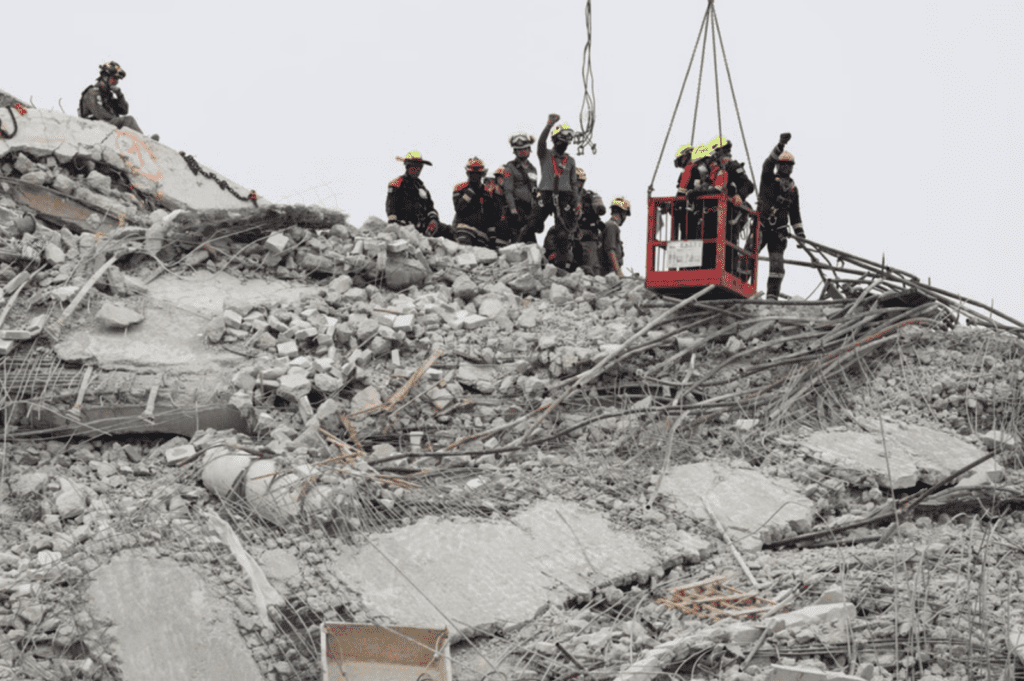
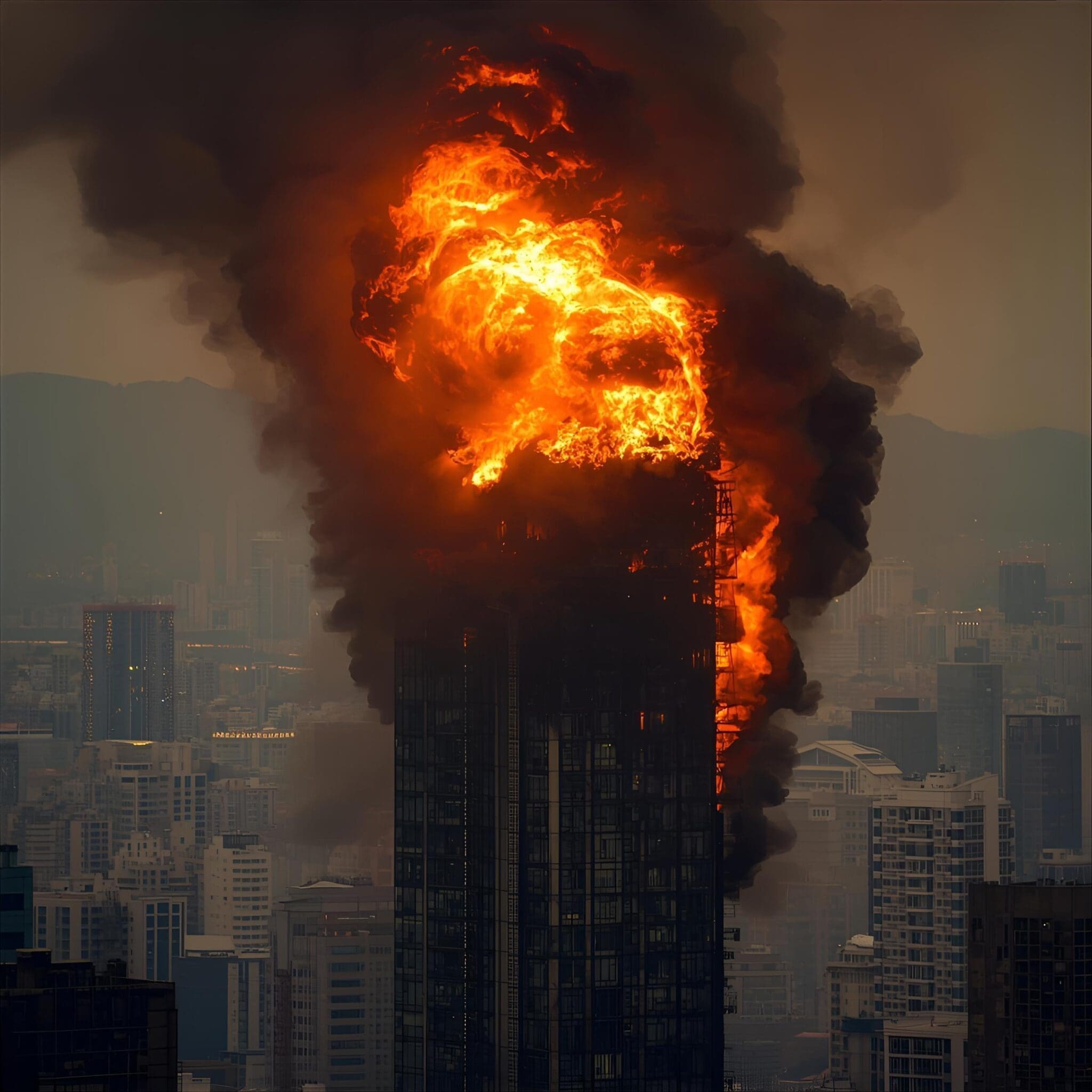
Image for illustrative purposes only. (Credit: Canva)
27 November – An enormous fire engulfed several tower blocks in Hong Kong on 26 November, killing at least 146 people and many still missing, with some residents trapped inside burning buildings, according to CNN.
Hong Kong police have arrested three men for manslaughter after a huge fire broke out at Wang Fuk Court housing estate. According to CNA, local police said that the blaze may have been spread by unsafe scaffolding and foam materials used during maintenance work.
By Thursday (27 November) afternoon, authorities said they had largely extinguished the fire in four of the seven affected blocks, while flames at the other three were under control. One block was unaffected.
Construction Risk: An Overlooked Driver of Catastrophic Urban Fires
The Tai Po tragedy underscores how construction-related hazards, including improper materials, poor contractor oversight and inadequate maintenance governance, can significantly amplify fire intensity and impede emergency response.
In dense Asia cities, these risks are magnified by ageing infrastructure, compact neighbourhoods, and complex building interconnections.
Experts Explained: Why the Hong Kong Fire Spread Rapidly
Fire experts have pointed to a combination of combustible materials as a key factor behind the rapid spread of the Hong Kong blaze. According to The Independent, a fire safety engineer said the intensity of the fire was likely exacerbated by plastic scaffolding encapsulation, plastic sheeting, and other flammable components used during maintenance works, which created conditions for flames to travel quickly across the building facade.
A professor from the University of New South Wales also highlighted mitigation strategies to reduce similar risks in future incidents, including replacing bamboo scaffolding with metal alternatives. “By eliminating the use of bamboo scaffolding, the risk of extensive building damage and loss of life could be significantly reduced,” said Professor Guan Yeoh.
Construction Risk as a Growing Urban Fire Threat
Tristan Ang, Group Head of Employee Benefits and Director at Odeon Insurance Brokers at International SOS, said construction-related fire risks have become an increasingly critical concern for dense Asian cities, particularly as ageing buildings undergo more frequent maintenance and refurbishment.
“The significance of construction-related fire risks for organisations operating in dense Asian cities has indeed become a critical concern, especially in light of incidents like the Tai Po fire and the increasing need for maintenance in older buildings in Hong Kong,” Tristan said. “These factors, combined with rapid urbanisation and development, create a heightened risk environment.”
From a risk perspective, Tristan said contractor practices remain a key vulnerability.
“Inconsistent contractor practices are a major issue. Inadequate training, poor adherence to safety protocols, and rushed work schedules often lead to shortcuts that compromise fire safety.”
Reflecting on the Tai Po incident, Tristan said the tragedy was not the result of a single lapse.
“The Tai Po fire was not caused by a single failure, but by a series of systemic breakdowns across processes, governance, and supervision. Gaps in oversight including procurement controls and the supervision of renovation works, point to broader duty-of-care issues among multiple stakeholders, highlighting the need for stronger accountability and end-to-end oversight.”
Strengthening Risk Awareness and Urban Resilience for 2026
This incident is a stark reminder that construction activities can rapidly escalate fire risks, especially in high-density urban environments with ageing buildings and interlinked systems. Traditional fire-safety controls are no longer sufficient on their own.
Risk managers will need to integrate construction risks into broader resilience strategies, such as strengthening contractor governance, improving on-site risk assessments, enhancing scenario-based training, and fostering closer coordination across facilities.
As cities continue to modernise and refurbish ageing infrastructure, proactive oversight and cross-functional preparedness will be essential to safeguard both people and business operations in 2026 and beyond.